
The Evolution of Language II: Mother Tongues and Family Trees
Introduction: Babel with Benefits
If you’ve ever tried ordering dinner in a language you barely speak — or even just in a different country — you’ve tasted the delightful chaos of linguistic diversity. One moment you’re asking for a type of smoked sausage made using pork (andouille), and the next you’re being served something that smells like a barnyard and is far more intestinal (andouillette). Welcome to the world of words that look familiar, but most definitely are not.
We previously explored how humans moved from grunt to grammar — from raw vocalisations to structured, meaningful language. This time, we turn to what happens after that first linguistic leap. Because once you’ve got a language, it doesn’t just sit there like a museum piece. It wanders, splinters, drifts, and multiplies.
Languages are living things. They grow old, they have offspring, they feud with their siblings, and sometimes they go extinct. What began as a single sprouting vine of human speech has since grown into a tangled garden of languages — some trimmed into tidy hedges, others wild and rambling across continents. What started as one ancestral tongue — or perhaps a few — eventually exploded into the 7,000+ languages spoken today (and counting… or, more often, dwindling). Much like species in evolution, languages descend from common ancestors, branch into families, and sometimes strike off in strange, beautiful directions no one expected.
In this article, we’re going to trace the genealogy of tongues:
- What makes a language a language (and not “just” a dialect)?
- How did one Latin become many Romance languages?
- Why are Welsh and Breton still tight-knit despite being separated by the sea — and a thousand years?
- And what about the loners like Basque or Ainu that don’t seem to fit anywhere on the family tree?
What began as a single sprouting vine of human speech has since grown into a tangled garden of languages — some trimmed into tidy hedges, others wild and rambling across continents.
What Is a Language, Anyway?
You might think the difference between a language and a dialect is a matter of grammar, vocabulary, or pronunciation. But in practice, it’s often more about flags, borders, and egos than it is about syntax.
The classic (and only slightly snarky) line from linguist Max Weinreich goes:
“A language is a dialect with an army and a navy.”1
This captures the dirty little secret of historical linguistics: political power — not mutual intelligibility — often determines what counts as a language. If you can rally a nation around it, print official documents in it, and teach it in schools, congratulations: your dialect just got promoted.
Take Mandarin and Cantonese. Both are officially classified as “dialects” of Chinese, yet they’re about as mutually intelligible as Italian and Portuguese — which is to say, not very2. Meanwhile, Scandinavian languages like Swedish, Danish, and Norwegian are often treated as distinct languages, despite high mutual intelligibility (especially in writing).
Or look at Hindi and Urdu. Grammatically and conversationally, they’re nearly identical — speakers can chat effortlessly — but one is dressed in Devanagari script and Bollywood gloss, the other in Perso-Arabic script and steeped in Islamic cultural identity3. Linguistically siblings, but politically estranged.
“Is This a Language or a Dialect?” Ask Three People, Get Five Opinions.
| Feature | Hindi | Urdu |
| Alphabet | Devanagari | Perso-Arabic |
| Spoken mutual intelligibility | ✅ High | ✅ High |
| Vocabulary | More Sanskrit-derived | More Persian/Arabic loanwords |
| Cultural associations | Hinduism, India, Bollywood | Islam, Pakistan, poetry |
| Official status | One of India’s official languages | Pakistan’s national language |
| Can they argue over chai in the same café? | Absolutely — and they’ll both call it chai. | |
Think of them as linguistic twins raised in different households — they speak the same at home but write different love letters.
The split between Hindi and Urdu is as much about script and symbolism as structure. The politics are visible, but the grammar rarely notices.
Serbian and Croatian add yet another wrinkle. Once part of the same standardized language (Serbo-Croatian), they’ve diverged more politically than linguistically. Today they have different names, different scripts (Cyrillic vs. Latin), and different national pride — but not dramatically different grammar or vocabulary.4
“Same Language, Different Flags?” – Serbian & Croatian
| Feature | Serbian | Croatian |
| Alphabet | Cyrillic (mostly) | Latin |
| Official status | Serbia, Republika Srpska | Croatia, Bosnia & Herzegovina |
| Grammar & vocabulary | Largely identical | Largely identical |
| Loanwords | More Slavic and Russian | More German, Italian, English |
| Linguistic origin | Serbo-Croatian | Serbo-Croatian |
| Are they separate languages? | Depends who you ask — especially in Belgrade or Zagreb | |
What used to be one standard language is now three or four official ones, depending on the day and the minister of education.
This is what happens when politics outruns linguistics. If mutual intelligibility were the test, Serbian and Croatian would be variants. But if national identity is the decider, then welcome to a family reunion with separate guest lists.
Back in Europe, you’ll find languages like Neapolitan, spoken in southern Italy, and Scots, spoken in parts of Scotland and Northern Ireland. Both are often dismissed as “dialects” of Italian and English respectively, yet they each have unique vocabularies, grammar, and long literary traditions. Scots in particular offers a vivid reminder that mutual intelligibility doesn’t mean mutual recognition — especially when one variety is overshadowed by the prestige of another.
A Tale of Two ‘Dialects’
Scots and Neapolitan are often labelled dialects — but whose definition are we using?
| Feature | Scots | Neopolitan |
| Grammar distinct from ‘standard’ | ✅ | ✅ |
| Unique Vocabulary | ✅ (“bairn”, “ken”, aye”) | ✅ (“uè”, “giggiare”, “mò”) |
| Recognisable literary tradition | ✅ (Robert Burns, Hugh MacDiarmid) | ✅ (Eduardo De Filippo, folk songs) |
| Mutual intelligibility with standard? | Depends who you ask | Depends how fast they talk |
| Official Status? | Kind of. Sort of. Not Really. | Nope. |
| Prestige? | Historically low, now being reclaimed | Historically low, still regional |
| Can you write a love poem in it? | Hell yes. | Assolutamente sì. |
“Ye cannae shove yer granny aff a bus5” might not sound like standard classroom English, but try telling that to a Glaswegian seven pints deep on a Saturday night.
Languages like these straddle a messy middle ground: too distinct to be “just” variants, too politically marginal to be recognised as full-fledged languages. The debate isn’t just academic — it shapes funding, education, and how speakers see themselves.
And what about Taiwanese Hokkien? It’s often mislabelled as a “dialect” of Chinese, but it isn’t mutually intelligible with Mandarin — not in speech, not in grammar, and certainly not in tone. It’s a distinct Sinitic language with deep roots in southern Fujian, shaped by centuries of migration, isolation, and local development.6 What it lacks is a dominant written form or official status — though it thrives in homes, markets, and “comedy”7 shows across Taiwan.8
Linguists generally sidestep these debates by talking in terms of dialect continua — smooth transitions across geography, like colour gradients rather than clear-cut paint swatches. The further apart two people live, the harder it is for them to understand each other9. But where exactly does one language end and another begin? That’s a judgement call — and often, a political one.
So, before we start building family trees and talking about “descendants” and “branches,” it’s worth remembering, some of those branches were drawn in pencil. Others, in ink. And a few, in blood.
Family Matters: How Languages Diverge
Imagine you left a voice recording for your great-great-great-grandchildren. Over time, as technology evolves, your descendants re-record the message onto new media — no one wants to try and track down a working MiniDisc player a thousand years from now — and the message is passed down, whispered, copied, adapted. By the time it reaches them, they understand a few words, maybe the gist — but it’s no longer your message. It’s theirs. Changed by time, distance, and repetition.10
That’s how languages diverge.
All it takes is separation. Put a group of speakers on an island (or in a forest, or up a mountain) and come back a few centuries later. You won’t find the same language — just a new variant, shaped by its surroundings. Maybe it sounds a little funny. Maybe it’s picked up some new vocabulary. Maybe its grammar has started doing something slightly weird.
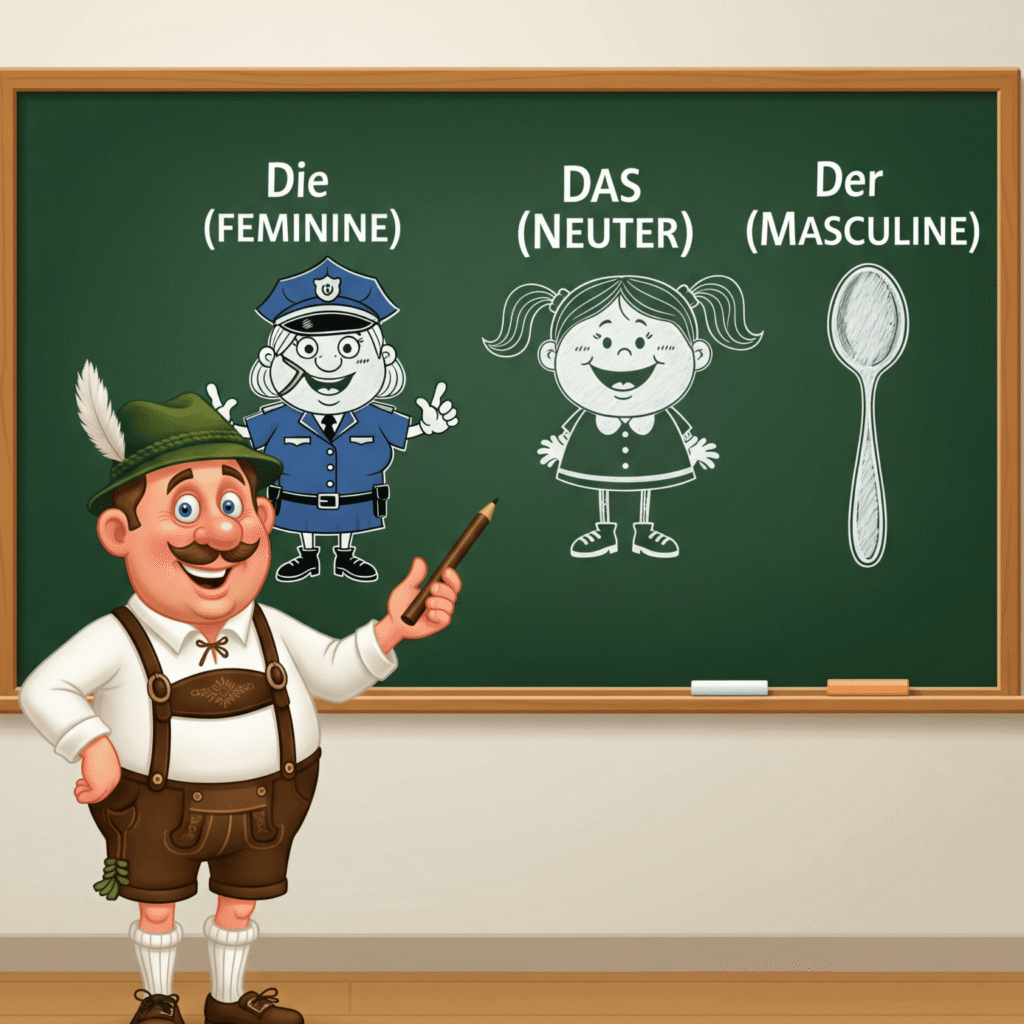
Do this a few dozen more times, and this is how languages diverge. From Latin we get Italian, Spanish, Portuguese, French, Romanian, and more. Meanwhile, from Proto-Indo-European we also get English and Persian—two linguistic cousins so distant and divergent they’d barely recognize each other at a family reunion. That’s what a few millennia of phonological drift and vocabulary remixing will do. Each twisted by time, contact, isolation. Sound shifts like Grimm’s Law — where ancient consonants crept and twisted from “p” to “f” and “d” to “t” — helped shape languages like English from their older Indo-European roots.11 You end up with a language family: a group of related languages that all trace back to a common ancestor
Latin → Italian, Spanish, Portuguese, French, Romanian0… and that’s just the obvious ones. Sardinian is the quiet middle child. French is the rebellious teen who never pronounces anything. Romanian went east, made some Slavic friends, and came back with an accent. They’re all family, but they’ve definitely grown apart.
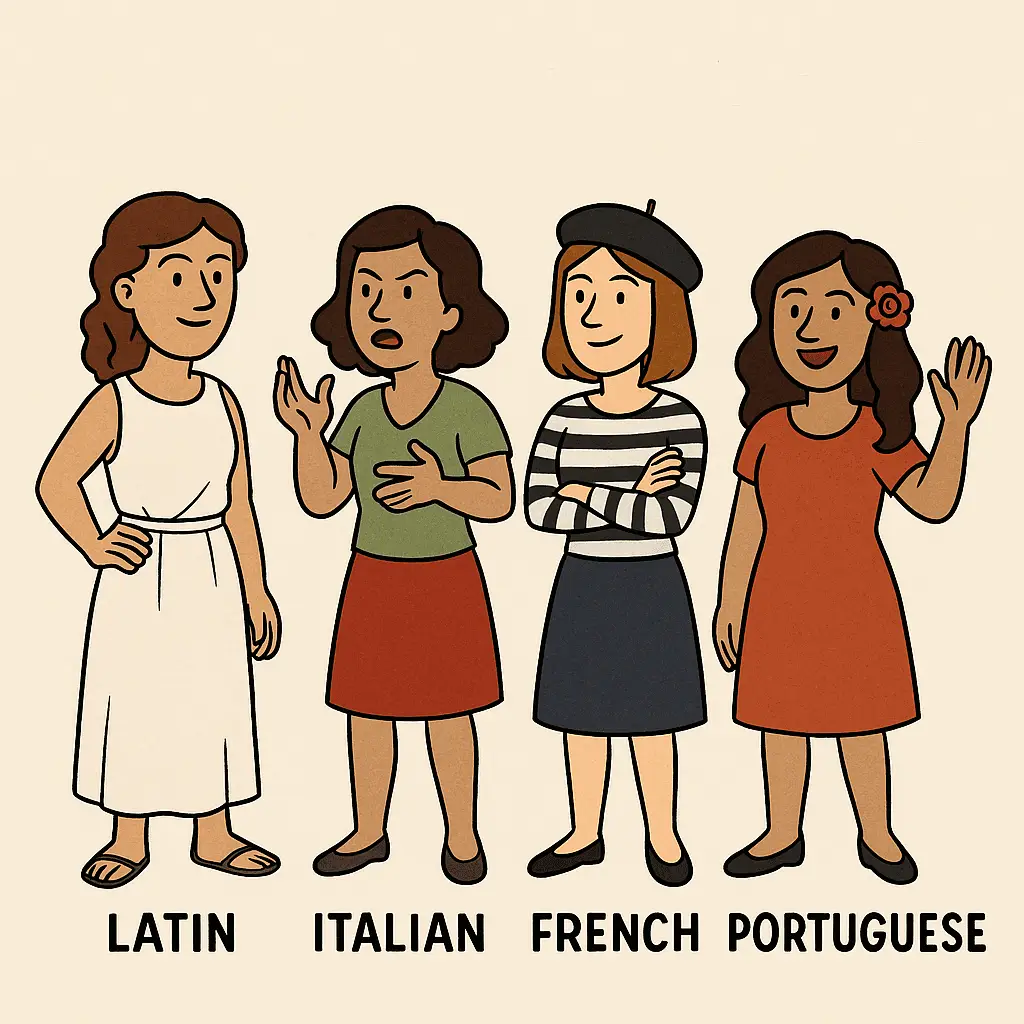
Language divergence is driven by12:
- Sound change: Shifts in pronunciation that build up over time (e.g. Latin pater → Spanish padre, French père)
- Vocabulary drift: Words fall out of use, new ones are coined or borrowed
- Grammatical evolution: Word order, verb endings, and case systems simplify, shift, or proliferate
Sometimes change is gradual — like a river wearing down a rock. Other times it’s rapid and jarring, especially after conquest, colonisation, or sudden migration.
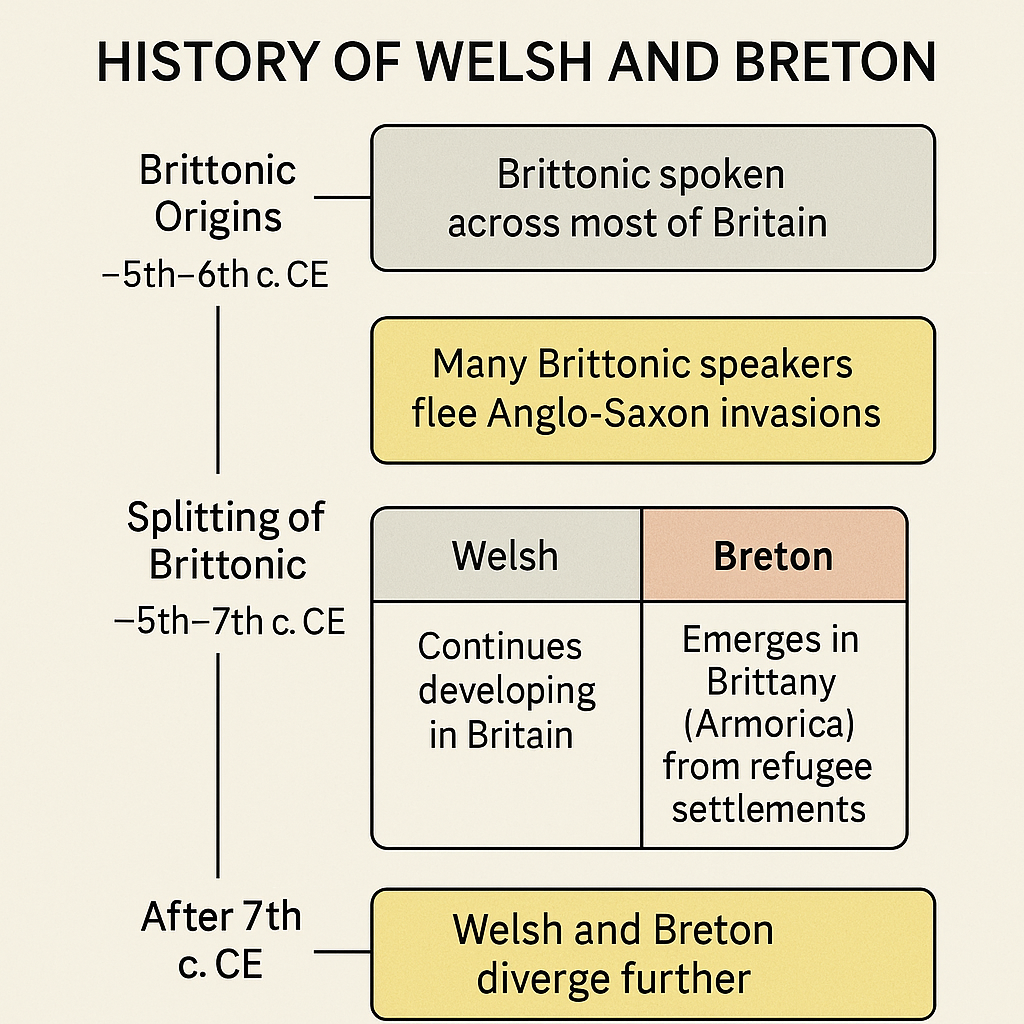
And geography isn’t the only factor. Cultures, trade routes, and prestige languages all play a role. Even Welsh and Breton, though separated by the English Channel and 1,400 years, remain strikingly similar — both descended from ancient Brittonic, preserved by separate migrations and long traditions of poetry and stubborn resistance to assimilation.
Separated at Birth — Welsh & Breton
“Cymraeg” and “Brezhoneg” may live on opposite shores of the Channel, but they share ancient DNA. And headwear.
Welsh and Breton are the only surviving daughters of Brittonic, the Celtic language once spoken across much of Roman and post-Roman Britain.14 As Anglo-Saxon pressure mounted in the 5th and 6th centuries CE, many Brittonic speakers fled to Armorica (modern Brittany), taking their words, gods, and livestock with them. The result? A new dialect that grew up on foreign soil — Breton — while back home, Welsh held its ground in the west.15
The languages remain cousins: they both use consonant mutations, love a good verb-noun hybrid, and sound like poetry even when you’re just asking for tea. But they’ve led very different lives. Welsh has been resurgent in schools and signage16; Breton has fought an uphill battle against French centralism and now survives mainly in the west of Brittany, and among determined revivalists.17
Mini Timeline: History of Welsh and Breton
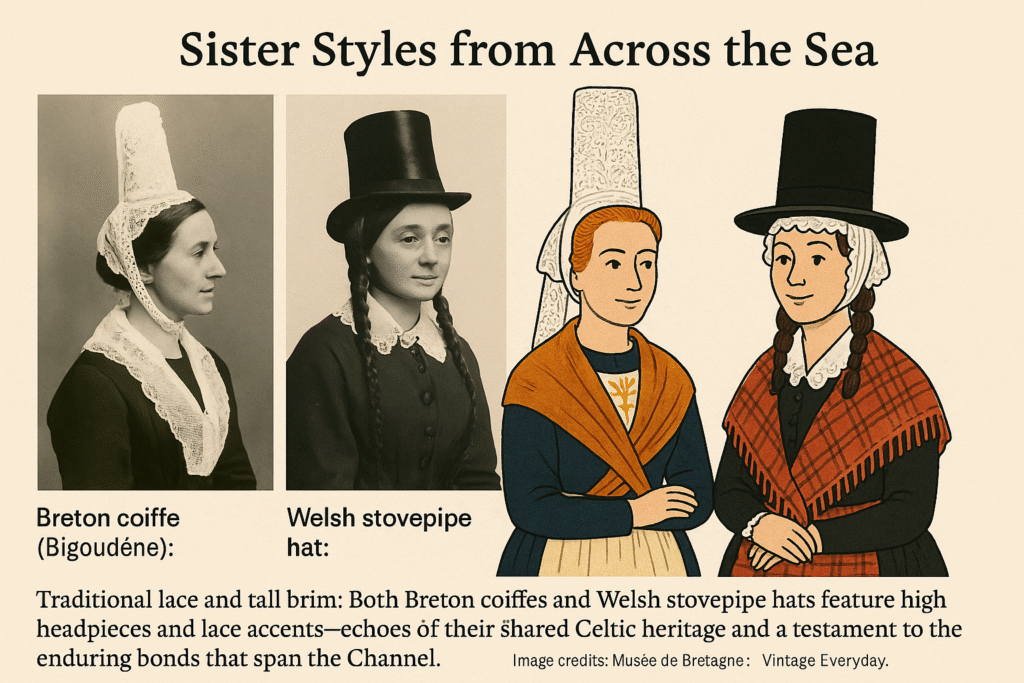
Sister Styles from Across the Sea
It’s not just in language that you can spot the family resemblance. Traditional folk dress in both cultures features elaborate women’s headwear: the lacey Breton coiffe and the tall Welsh stovepipe hat. Though developed independently, these iconic styles speak to shared aesthetics — and perhaps a shared flair for dramatic millinery.
Quick Fact
Despite their common roots, Welsh and Breton are not mutually intelligible — though both have familiar words like tad (“father”) and brawd/breur (“brother”), and a musical quality that makes either one a joy to hear, even if you don’t understand a word.18
Reconstructing the Lost Voices: Proto-Languages
Not all ancestors leave behind a diary. Some leave only fingerprints — and linguists have learned how to read them.
A proto-language is a hypothetical, reconstructed tongue — the common ancestor of a language family. It’s not attested to in writing, but by comparing the languages it gave rise to, we can reverse-engineer what it probably sounded like. It’s linguistic archaeology without the trowel.

The most famous of these is Proto-Indo-European (PIE), the ancestral root of most modern European and many South and Central Asian languages; the name “Indo-European” comes from 19th-century linguists who noticed striking similarities between Sanskrit and languages across Europe—hence a family stretching from India to Iceland (and beyond). No one ever wrote it down, but we’re fairly confident it existed. Linguists have spent two centuries comparing Latin, Greek, Sanskrit, and others, mapping consistent sound changes and building a remarkably detailed picture of PIE’s vocabulary, grammar, and even phonology — and how these evolved into later branches like Proto-Germanic.13
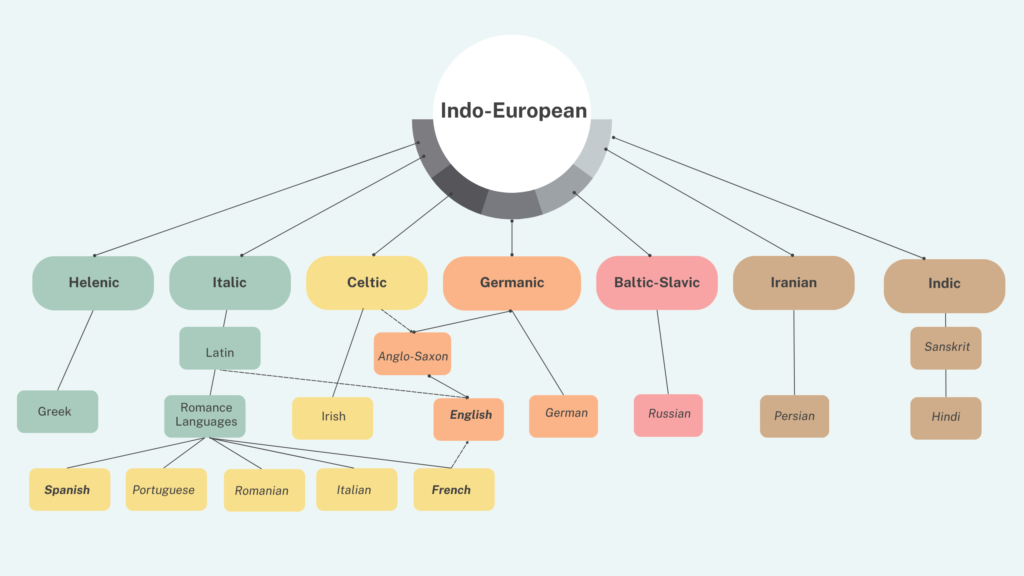
For example:
• Latin pater, Greek patēr, Sanskrit pitṛ́ → all suggest PIE *ph₂tḗr (“father”)
• The word for “wheel,” kʷekʷlos, turns up in Greek (kyklos), Sanskrit (cakra), and Latin (cyclus → “cycle”)14
Yes, they had a word for wheel. Yes, they probably had a word for snow. No, we’re not sure if they had one for “pleasure taken from the misfortune of others”, we suspect the Germans invented that one.
This method — called the comparative method15 — relies on finding cognates: words in different languages that have a shared origin, even if they’ve drifted apart over time. (More on this later.) By identifying systematic sound correspondences, linguists can work backwards from modern forms to reconstruct ancestral ones.
One particularly accessible resource is the American Heritage Dictionary of Indo-European Roots16, which offers PIE reconstructions alongside their modern English descendants — ideal for armchair etymologists and curious cat owners alike (see footnote 20 if you missed it).
But this process isn’t just about sounds — it also reveals ancient culture. From reconstructed PIE17, we know its speakers likely had horses (*h₁éḱwos), wheeled vehicles, and a patriarchal society. No written records, but plenty of linguistic fossils.
And it’s not just PIE. We have reconstructions of Proto-Afroasiatic, Proto-Austronesian, Proto-Uralic, Proto-Turkic, and many others — even if they’re fuzzier and more controversial. The older the language family, and the fewer surviving daughter languages, the harder it is to reconstruct. Beyond a few thousand years, the trail goes cold.
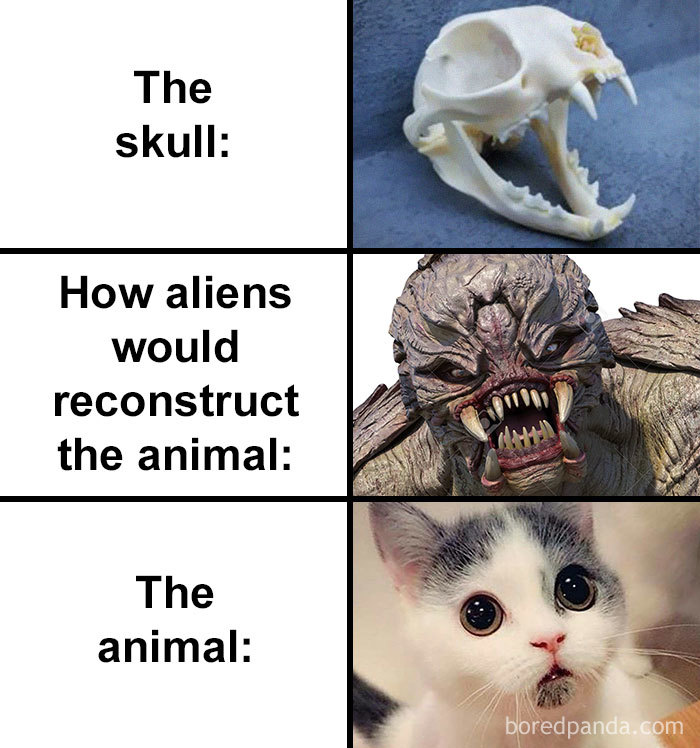
Reconstructing a proto-language is like rebuilding a skeleton from scattered bones18 — except half the bones are guesses, and no one agrees where the femur goes.
Islands, Orphans, and Outliers
Some languages fit neatly into families — descendants of well-documented ancestors with siblings galore. Others are loners. Linguistic hermits. The black sheep of the verbal world. These are the language isolates: tongues with no known relatives, no clear connections, and no family reunions to attend.
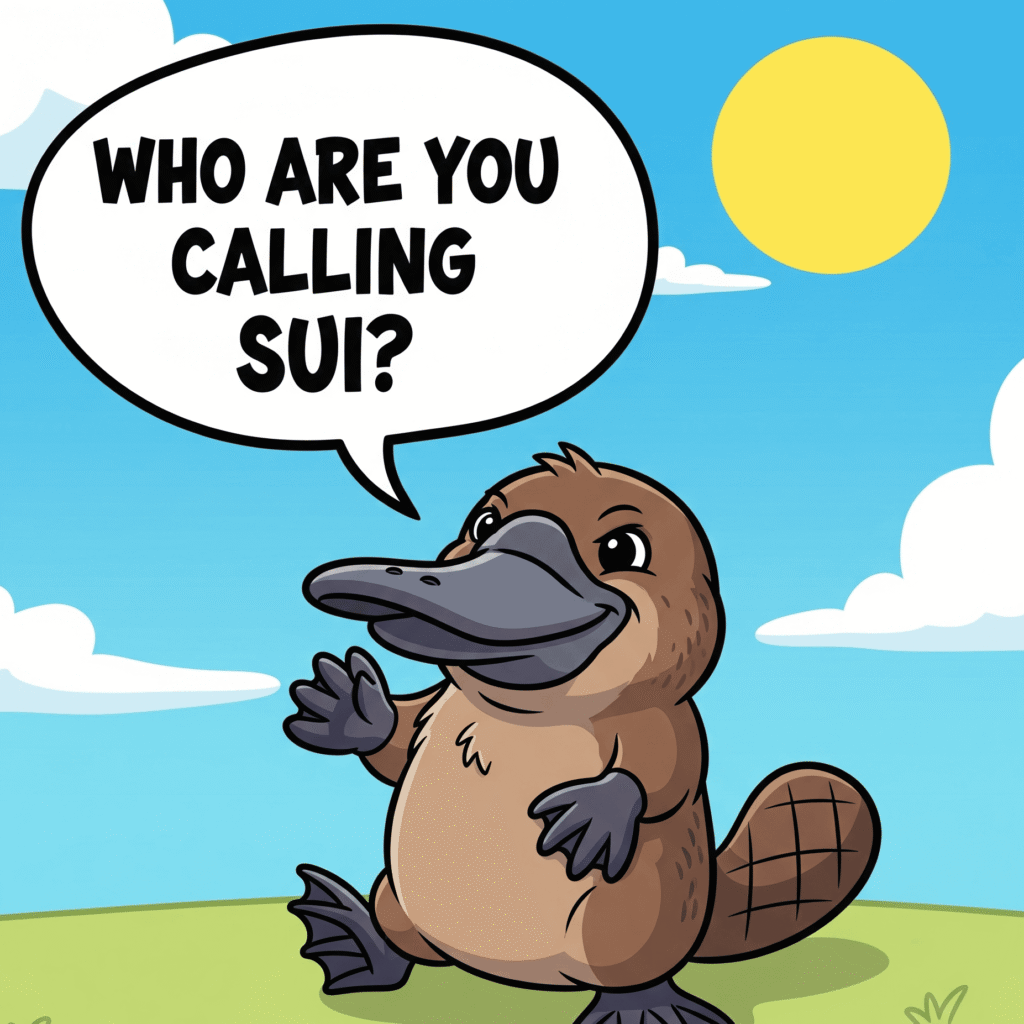
The most famous of these is Basque, spoken in a mountainous stretch between France and Spain. It predates Latin, defied Indo-Europeanization, and continues to confuse linguists and delight contrarians. Basque doesn’t just sound different — its grammar, vocabulary, and structure are all sui generis. Despite centuries of contact, it’s still utterly unrelated to Spanish, French, or anything else. It’s the linguistic equivalent of a platypus.
Another isolate — and a particularly poignant one — is Ainu, once spoken widely across northern Japan, Sakhalin, and the Kuril Islands. Today, it survives in heavily endangered form on Hokkaido, with revitalization efforts underway but only a few fluent speakers remaining. Ainu culture is rich in oral folklore, hunting rituals, and cosmological epics — and the language reflects this, featuring intricate verb morphology and an extensive vocabulary related to nature, animals, and seasonal cycles.20

Structurally, Ainu doesn’t resemble Japanese or any other surrounding language. For a time, some linguists speculated about distant links to Austroasiatic or Altaic languages, but most of those proposals have been set aside as wishful comparative thinking.21
Ainu is also a powerful example of how language loss intertwines with colonialism. During Japan’s Meiji era, the Ainu were forcibly assimilated, their language suppressed, and their cultural identity erased from the national narrative. Only in recent decades has there been a growing movement to recognize, preserve, and teach Ainu language — led by Ainu communities themselves.22
One government-funded school in Hokkaido now offers immersion programs for children and adults, and there’s a small but lively YouTube scene featuring Ainu greetings, songs, and storytelling. Whether that’s enough to save it remains uncertain — but the voice hasn’t gone silent yet.23
Other isolates include Burushaski in northern Pakistan, and possibly even Kusunda in Nepal (though its last fluent speaker passed away in 2020). Some of these languages are critically endangered, often spoken only by a handful of elders — oral relics clinging to the edges of language history.
Some isolates weren’t born alone — they just outlived their relatives. Languages like Sumerian, Elamite, and Etruscan are considered extinct isolates: once vibrant, written, and spoken, but now without any known living descendants or close relatives. Their uniqueness haunts the historical record — full of grammar we can sometimes decipher, and meaning we often can’t.24
But “isolate” doesn’t necessarily mean eternal solitude. Languages once thought to be isolates have sometimes found long-lost cousins. Etruscan, spoken in ancient Italy before Latin took over, remains a puzzle, but some scholars suggest distant ties to the Tyrsenian group (if we ever find enough evidence). Linguistics is a patient science — and occasionally a romantic one, always hoping for that Disney moment.
Of course, some languages may have had siblings — but those siblings are long gone, leaving no trace. It’s entirely possible that Basque once had cousins across pre-Roman Europe, wiped out by Latin and its descendants. In that sense, isolates may be linguistic orphans, not born alone, but left alone.
And then there are the pseudo-isolates — languages that look unrelated but aren’t. Korean, for instance, is often called an isolate, but some linguists argue it might belong to the Altaic or Trans-Eurasian group (alongside Turkic, Mongolic, and Tungusic), though this theory is hotly contested. Others view it as a language peninsula: almost isolated, but with just enough fuzzy edges to keep it interesting.
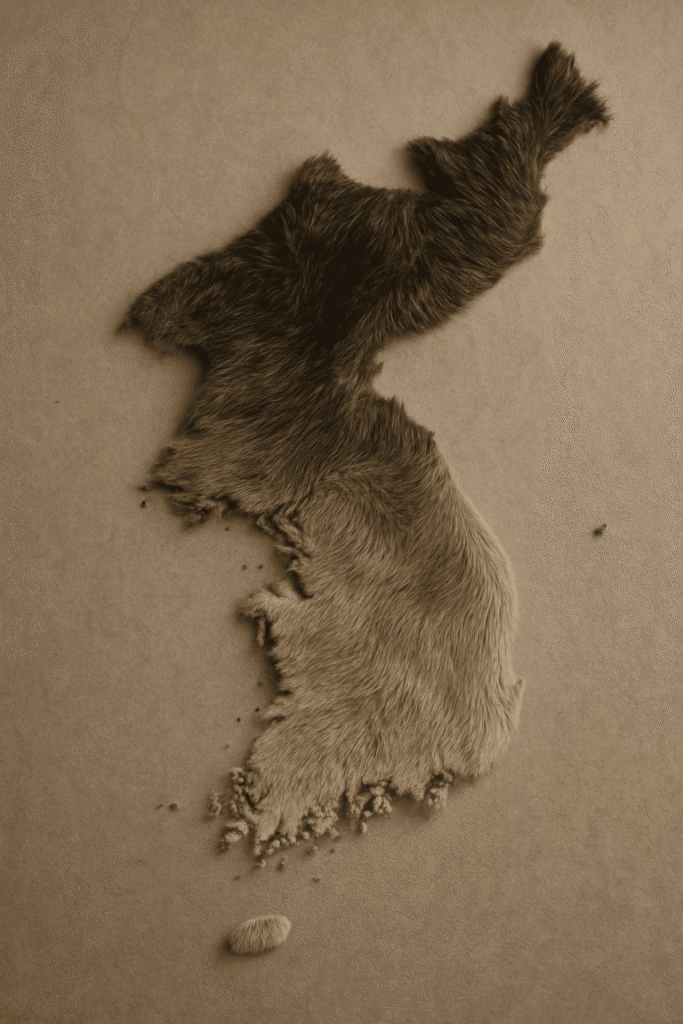
In the end, isolates remind us that language history is full of gaps, dead ends, and tantalizing silences. They’re the punctuation marks in the story — or at least the ellipses.
It’s Evolution, Jim—But Not As We Know It
Language evolves. But unlike your lockdown hairstyle, it’s not just a matter of random growth. Linguistic evolution bears a striking resemblance to biological evolution—only messier, sneakier, and far more prone to borrowing the neighbours’ socks, in short, it’s more like the average student’s fridge.
Language as a Living System
Like genes, words mutate, replicate, and get passed on. Sound shifts, grammatical change, and syntactic drift all resemble evolutionary processes in biology. Think of Grimm’s Law25 (which turned PIE p, t, k into Germanic f, th, h) as the linguistic equivalent of a heritable mutation. Languages “speciate” over time, diverging into dialects and eventually separate tongues—just like Darwin’s finches.
But don’t take the metaphor too far. Unlike biological evolution, language isn’t bound by DNA. It’s a cultural system, transmitted through learning, not genetics. Which brings us to…
The Family Tree: Not Wrong, Just Overly Tidy
Historical linguists often chart language descent using family trees—Indo-European, Afro-Asiatic, Sino-Tibetan and so on. It’s tidy, logical, and gives us that satisfying genealogical glow. But it’s also a lie. Or at least a well-meaning oversimplification.
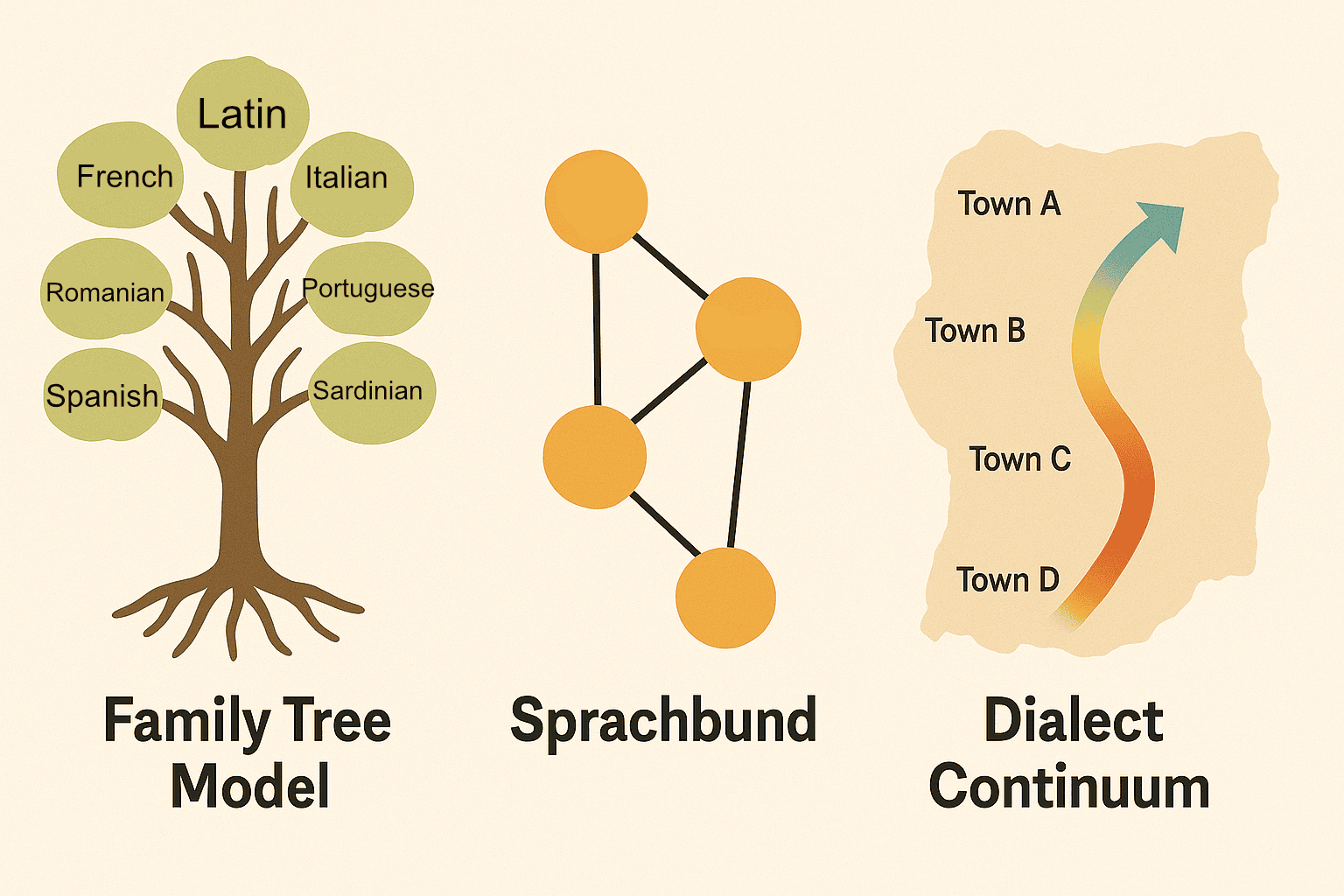
Languages don’t just branch—they blend. They borrow. They interbreed. The tree model can’t easily show influence between unrelated languages, or what happens in multilingual societies where people switch codes like teenagers swap spittle.26
Horizontal Borrowing: The Great Linguistic Swap Meet
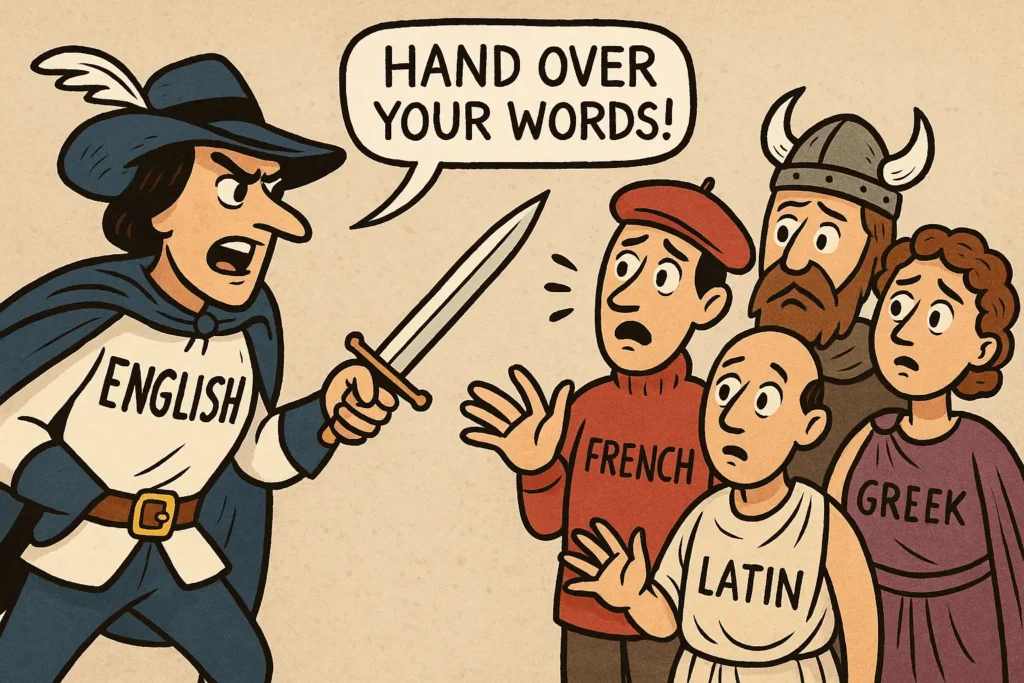
While genetic inheritance shapes core vocabulary (think “mother,” “water,” “one”), languages gleefully loot each other for other terms. English is either a master criminal or back-alley mugger in this respect, stealing from Norman French, Norse, Latin, Hindi, Japanese… you name it.
- Ballet (French), piano (Italian), bungalow (Hindi via Portuguese), sushi (Japanese), algebra (Arabic), robot (Czech), wok (Cantonese), ketchup (Hokkien), schadenfreude (German), pyjamas (Hindi again), marmalade (Portuguese), anorak (Inuit)…
Even pronouns and function words can shift under pressure. The Balkan languages, for example27, share a range of features not because they’re closely related, but because they’ve been living together too long… a bit like
Creoles, Pidgins, and Linguistic Mischief
When people from different linguistic backgrounds need to talk—often in colonial or trade settings—a pidgin may emerge: a simplified mix with basic grammar. If that pidgin becomes the mother tongue of a new generation, it’s a creole28.

Famous examples:
- Tok Pisin (Papua New Guinea)
- Haitian Creole (French + African substrate)
- Krio (Sierra Leone, based on English)
Creoles challenge our notion of “descent” and show just how quickly languages can be born.
Sprachbunds: Not Related, Just Intimate
A Sprachbund (language union, another word English stole…) forms when unrelated languages share features due to long-term contact. Think of it as linguistic osmosis.
Balkan Sprachbund:
- Shared use of postposed definite articles (e.g., Romanian omul, “the man”)
- Similar future constructions
- Loss of infinitive forms
South Asian Sprachbund:
- Retroflex consonants across Indo-Aryan and Dravidian languages
- Similar word order (SOV)
- Shared honorifics and kinship terms
These similarities don’t come from a common ancestor—they come from cultural closeness, multilingualism, and the human tendency to mirror speech. It’s why people accidentally adopt the accent of the area they live in.
Dialect Continua and Distant Cousins
Imagine driving from Lisbon to Warsaw, stopping every 50 km to listen to how people talk. Each town would sound slightly different from the last, but over the course of the journey, the dialects would gradually shift from Portuguese to Polish. Somewhere in Germany, mutual intelligibility fades.
This is a dialect continuum, where language boundaries are fuzzy. Dutch and German shade into one another. Hindi and Urdu are politically separate but linguistically entwined.
Even more confusing? Some languages look related due to borrowing but aren’t. Take Japanese and Chinese—tons of shared vocabulary, but completely different grammatical systems and linguistic roots.
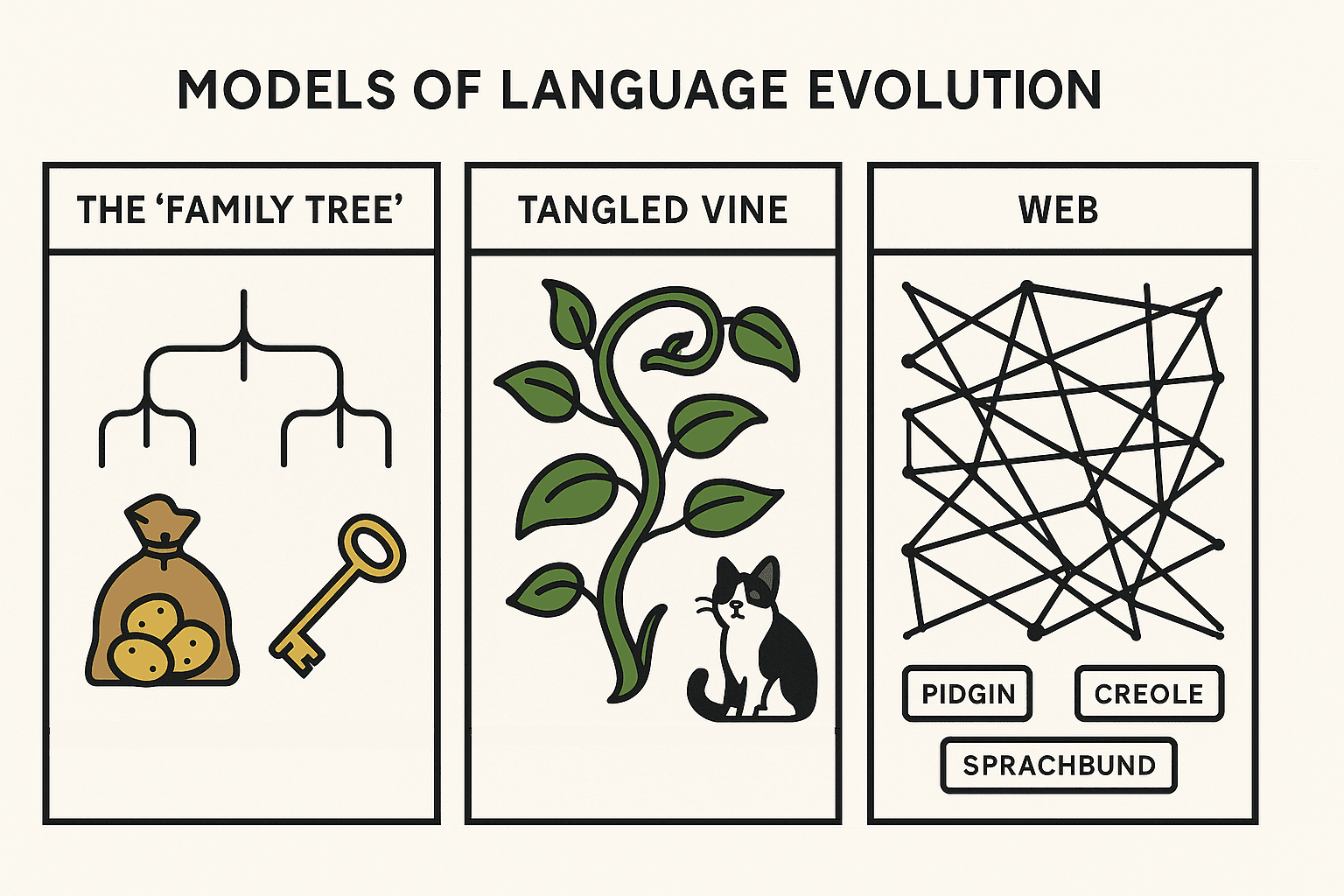
So, evolution, yes—but forget neat branches. Think tangled vines, hybrid roses, and the occasional Frankenstein’s monster.
What on Earth is: a Cognate?
A cognate is a word that shares a common origin with another word in a different language. For example:
- English mother and German Mutter ← both from Proto-Indo-European méh₂tēr
- Spanish noche, French nuit, English night ← all from PIE nókʷts
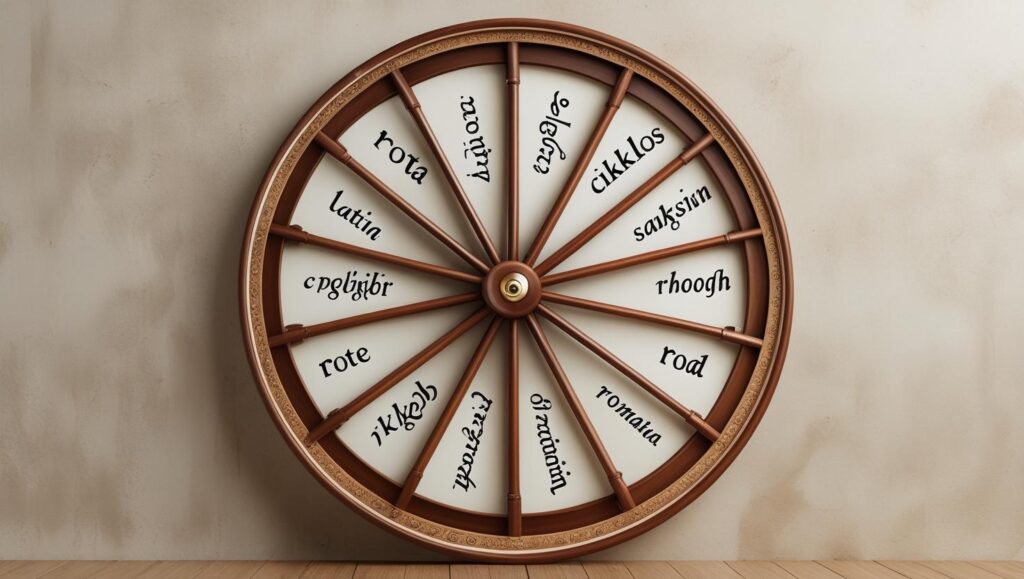
Cognates are linguistic fossils. They’re what allow “linguistic archaeologists” to reconstruct proto-languages like PIE (Proto-Indo-European), even though nobody’s spoken them in thousands of years.
But beware the false friend. Just because two words look alike doesn’t mean they’re related:
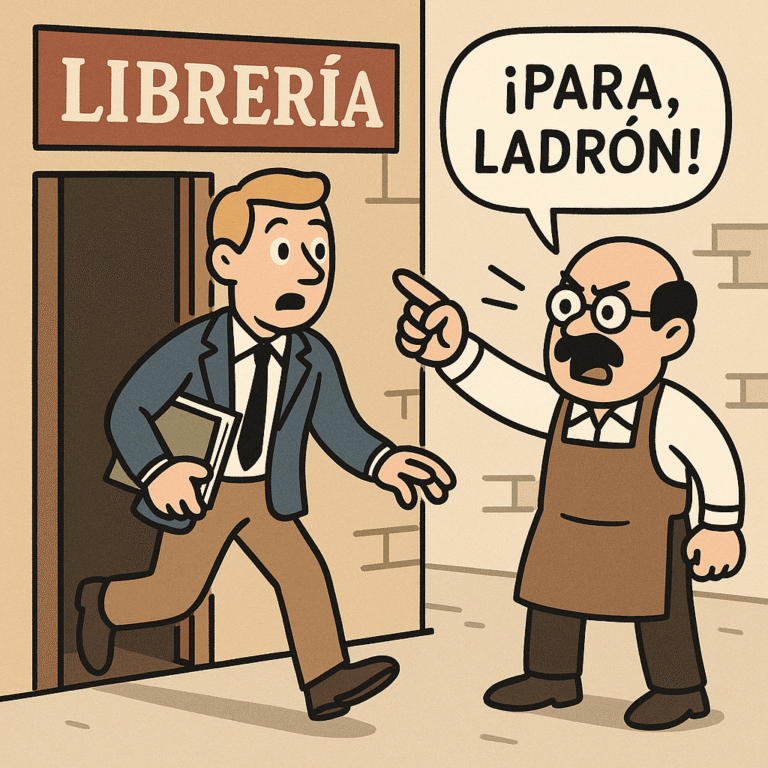
- Gift: English = present; German Gift = poison.
- Preservative: English = food additive; French préservatif = condom.
- Embarazada: Spanish = pregnant; English embarrassed = awkward.
Sometimes cognates reveal surprising links. English wheel and Sanskrit cakra (as in chakra) come from the same PIE root: kʷekʷlos. Useful info for those of you trying to choose between spinning classes and yoga.
Linguistic Urban Legend: “The Inuit Have 100 Words for Snow”
You’ve heard it. You may have said it. But it’s not true, or at least, not in the way most people think it is.
The myth dates back to early 20th-century anthropologist Franz Boas29, who noted that Inuit languages distinguish various types of snow. Later writers exaggerated this into wild claims of 50, 100, or even 400 words.
The truth? Inuit-Yupik languages are polysynthetic, meaning they build long, complex words by stringing together many smaller elements. So instead of “snow falling softly,” you get one word that does the job—like qimuqsuq (“drifting snow”).
Are there lots of snow words? Yes—but they’re built from roots and modifiers, much like English has “snow,” “snowflake,” “snowstorm,” “sleet,” “blizzard,” “powder,” “slush,” and “graupel30.”
Bonus Round: Do Scots Have More Words for Rain?
Yes—and no. Scots certainly have a rich vocabulary31 for miserable weather:
- Smirr = fine drizzle
- Dreich = dull, gloomy
- Drookit = soaked
But is it a unique feature? Not really. Any culture that lives with regular rain tends to get creative with how they describe it. Just ask the Welsh. Or the Irish. Or Keelung.
The End (For Now): From One Voice, a Chorus
Language is a shapeshifter. It splits, merges, loops back on itself, and borrows shamelessly. It evolves not in tidy stages, but in bursts, detours, and linguistic back alleys.
And like all families, linguistic lineages are messy. Some languages go extinct. Others give birth to new dialects. Some reunite across time (looking at you, Modern Hebrew). The family reunion is never over.
Coming up next: Borrowed Tongues – How Languages Mingle and Make Merry.
We’ll explore how languages pillage, adapt, and cross-pollinate, from English’s linguistic kitchen sink to Japanese loanword gymnastics.
- Weinreich, Max. (1945). ‘Der YIVO un di problemen fun undzer tsayt.’ YIVO Bleter. ↩︎
- DeFrancis, John. (1984). The Chinese Language: Fact and Fantasy. ↩︎
- King, Christopher R. (1994). One Language, Two Scripts: The Hindi Movement in Nineteenth Century North India. ↩︎
- Greenberg, Robert D. (2004). Language and Identity in the Balkans: Serbo-Croatian and its Disintegration. ↩︎
- Scots Language Centre. (n.d.) ‘Ye Cannae Shuv Yer Granny Aff a Bus’. Retrieved from: https://www.scotslanguage.com/articles/node/id/411 ↩︎
- Klöter, Henning. (2005). Written Taiwanese. Harrassowitz. ↩︎
- If comedy is defined as loud shouting and dodgy sound effects. ↩︎
- Sandel, Todd L. (2003). ‘Linguistic Capital in Taiwan: The KMT’s Mandarin Language Policy and Its Perceived Impact on the Ethnolinguistic Identity of Taiwanese.’ Language in Society, 32(4). ↩︎
- My grandmother claimed she could recognize which end of the road someone lived on based solely upon her accent. While she may have been exaggerating, she certainly could tell if someone was from the other side of the valley. ↩︎
- This is also the core problem with nearly every movie featuring time travel: how could anyone from the 20th or 21st century expect to understand or be understood in medieval times? Have you ever tried to read Chaucer? ↩︎
- Fortson, Benjamin W. (2010). Indo-European Language and Culture: An Introduction. Wiley-Blackwell. ↩︎
- Campbell, Lyle. (2004). Historical Linguistics: An Introduction. Edinburgh University Press. ↩︎
- Ringe, Don. (2006). From Proto-Indo-European to Proto-Germanic. Oxford University Press. ↩︎
- Incidentally, I once had a cat named Caius — pronounced “Keys.” The name was inspired less by Roman history than by the Cambridge college, Gonville and Caius, which famously retains the odd historical pronunciation despite the Latin spelling. The college was renamed in the 16th century by physician John Caius, whose family name was originally Keys. During the 16th century, it was a common practice among academics to Latinise their names to fit in with the scholarly language of the time. Dr. John Keys followed this trend and changed his surname to “Caius.” Despite the new spelling, he and the academic community in Cambridge retained the original pronunciation of his name. While this felt linguistically fitting, it was semantically chaotic, not to mention pretentious, much like this footnote that was only added because cyclus reminded me of Caius. ↩︎
- Clackson, James. (2007). Indo-European Linguistics: An Introduction. Cambridge University Press. ↩︎
- Watkins, Calvert (ed.) (2000). The American Heritage Dictionary of Indo-European Roots. Houghton Mifflin. ↩︎
- Beekes, Robert S. P. (2011). Comparative Indo-European Linguistics. John Benjamins Publishing. ↩︎
- If future linguists ever dig up a dusty hard drive of TikTok transcripts, they may reconstruct “sus,” “yeet,” and “lol” as part of a lost ceremonial chant — or mistake our memes for religious texts —Deutscher, Guy. (2005). The Unfolding of Language, Henry Holt & Co. ↩︎
- https://www.boredpanda.com/skull-how-aliens-would-reconstruct-animal-meme/ ↩︎
- Vovin, Alexander. A Reconstruction of Proto-Ainu. Brill, 1993. ↩︎
- Shibatani, Masayoshi. The Languages of Japan. Cambridge University Press, 1990. ↩︎
- Siddle, Richard. Race, Resistance and the Ainu of Japan. Routledge, 1996. ↩︎
- UNESCO Atlas of the World’s Languages in Danger. Entry: Ainu. https://www.unesco.org/languages-atlas/en/atlasmap/language-id-12.html ↩︎
- Campbell, Lyle. Historical Linguistics: An Introduction. Edinburgh University Press, 2004. See also: Roger D. Woodard (ed.), The Ancient Languages of Mesopotamia, Egypt and Aksum. Cambridge University Press, 2008. ↩︎
- Fortson, Benjamin W. Indo-European Language and Culture: An Introduction. Wiley-Blackwell, 2004. ↩︎
- Aikhenvald, Alexandra Y. Language Contact and Language Change. Oxford University Press, 2021. ↩︎
- Mithun, Marianne. The Languages of Native North America. Cambridge University Press, 1999. ↩︎
- Haspelmath, Martin. The World’s Simplest Grammars Are Creole Grammars. Linguistic Typology 13(2): 2009. ↩︎
- Pullum, Geoffrey K. “The Great Eskimo Vocabulary Hoax.” Natural Language & Linguistic Theory, 1989. ↩︎
- Graupel, also called soft hail or hominy snow or granular snow or snow pellets, is precipitation that forms when supercooled water droplets in air are collected and freeze on falling snowflakes, forming balls of crisp, opaque rime — yes, I had to look this one up! https://en.wikipedia.org/wiki/Graupel ↩︎
- Trask, R.L. Historical Linguistics. Arnold, 1996. ↩︎
P.S. I am fairly convinced that Chinese uses “mouse” far more than is strictly necessary. A rat is a mouse, a three stripe mouse (hamster) is a mouse, a bag mouse (kangaroo) is a mouse, and yes, a mouse is a mouse.